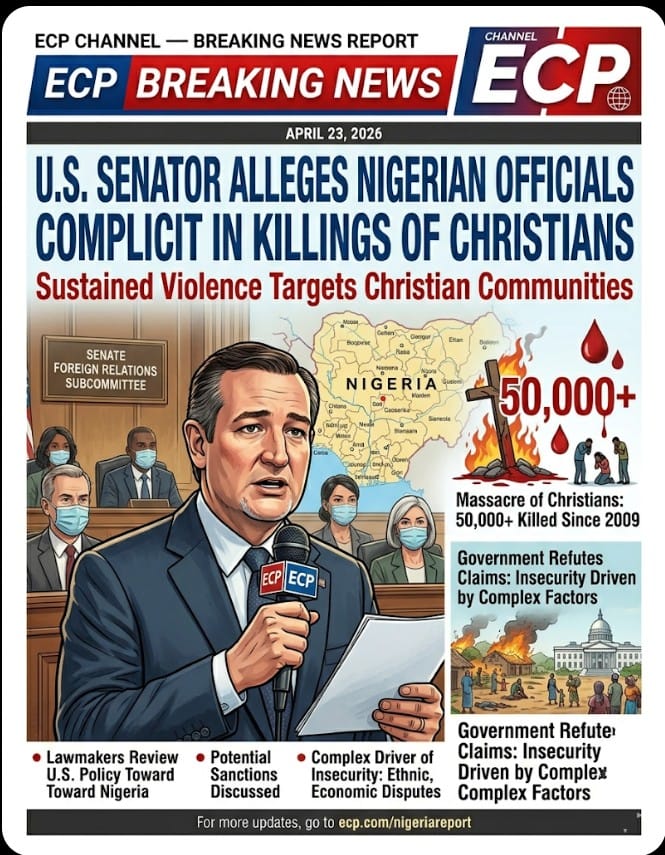


;br>The remarks were delivered during a formal congressional session examining U.S. counterterrorism strategy on the African continent. Lawmakers reviewed ongoing threats posed by extremist groups and broader instability in the region, with Nigeria identified as a focal point due to persistent violence.
Cruz’s comments are part of a broader push among some U.S. policymakers advocating stronger diplomatic and policy responses toward Nigeria, including potential sanctions and religious freedom designations.
Complex Security Landscape in Nigeria
Nigeria, Africa’s most populous nation, continues to face layered security challenges ranging from insurgency in the northeast to banditry, communal clashes, and farmer-herder conflicts across multiple regions.
While religious communities have been affected by violence, analysts note that the drivers of insecurity are multifaceted, often involving ethnic, economic, and territorial disputes alongside extremist activity.
Official Responses and Ongoing Debate
Nigerian authorities have previously rejected similar allegations, maintaining that the government does not support or enable religious persecution and that security efforts are directed at protecting all citizens regardless of faith.
The claims have nonetheless fueled renewed international debate over the nature of violence in Nigeria, with policymakers, analysts, and advocacy groups divided on whether the crisis reflects targeted religious persecution or a broader breakdown of security.
Outlook
The latest remarks are expected to intensify diplomatic conversations between the United States and Nigeria, particularly around counterterrorism cooperation, human rights, and religious freedom.
Further responses from Nigerian officials are anticipated as the issue gains traction within international policy circles.
ECP Channel
The Truth and Nothing But the Truth