s speak louder than any speech made from a podium.
They are not lazy. They are not unwilling. They are trapped in a system that takes more than it gives.
When Poverty Becomes a Structure
Poverty in Nigeria is no longer a passing hardship. It has settled into the foundation of society. It shapes choices. It limits dreams. It decides who eats and who waits.
Food prices rise faster than wages. Transport costs climb. School fees increase. Medical bills grow heavier. Yet income for the average Nigerian remains uncertain and small. A family can work every day and still fall deeper into need.
This is not the poverty of natural disaster. It is the poverty that grows where leadership fails to build systems that work. Where resources are rich but management is poor. Where promises are loud but results are quiet.
A nation blessed with oil, land, youth, and talent should not produce this level of hardship. When abundance exists but the people suffer, something is wrong at the root.
A Government Far From the Ground
Government exists for one purpose above all else: to serve the people. To protect. To provide structure. To create conditions where citizens can live with dignity.
But what does the ordinary Nigerian truly receive?
Security is uncertain. Communities fear kidnappers and bandits.
Healthcare is expensive and often out of reach.
Education, once seen as the ladder out of poverty, now strains families to the breaking point.
Clean water, steady electricity, good roads, and reliable public services remain luxuries in many places.
Social welfare for the unemployed, the elderly, single mothers, and vulnerable children is weak or absent. When hardship comes, people fall — and many never rise again.
Yet taxes grow. Tariffs increase. Levies multiply. The government’s hand is firm when collecting, but faint when providing.
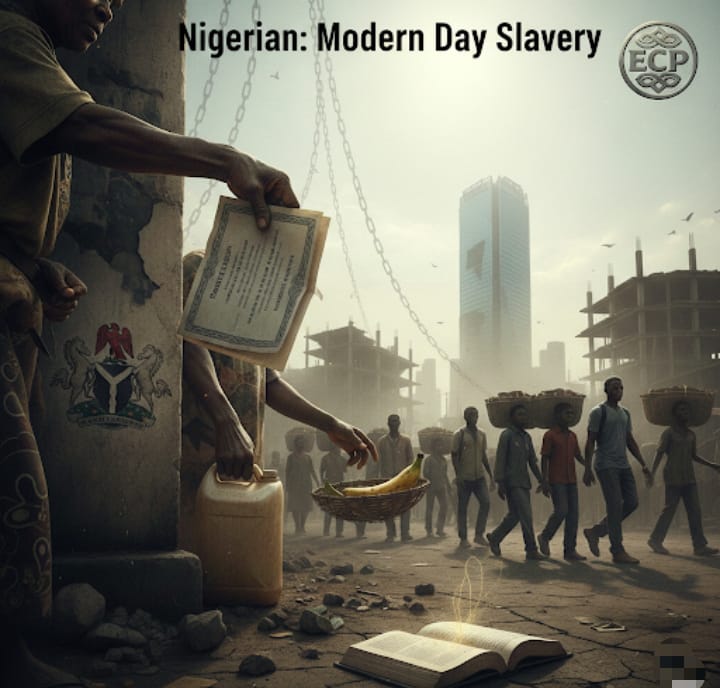
This is how modern slavery works. The labor of the people sustains the system, but the system does not sustain the people.
A Nation of Hustlers
Nigerians are known for strength and hustle. We adapt. We survive. We find ways. But survival should not be the highest achievement of a citizen in a democratic nation.
When young people see no path at home, they risk deserts, seas, and unknown lands. When children leave classrooms to work, the future is being quietly buried. When families sell assets just to treat illness, poverty becomes inheritance.
This is not because Nigerians lack ability. It is because opportunity is too scarce and unevenly distributed.
A small circle thrives. The vast majority manage. Many drown silently.
The Danger of Conditioning
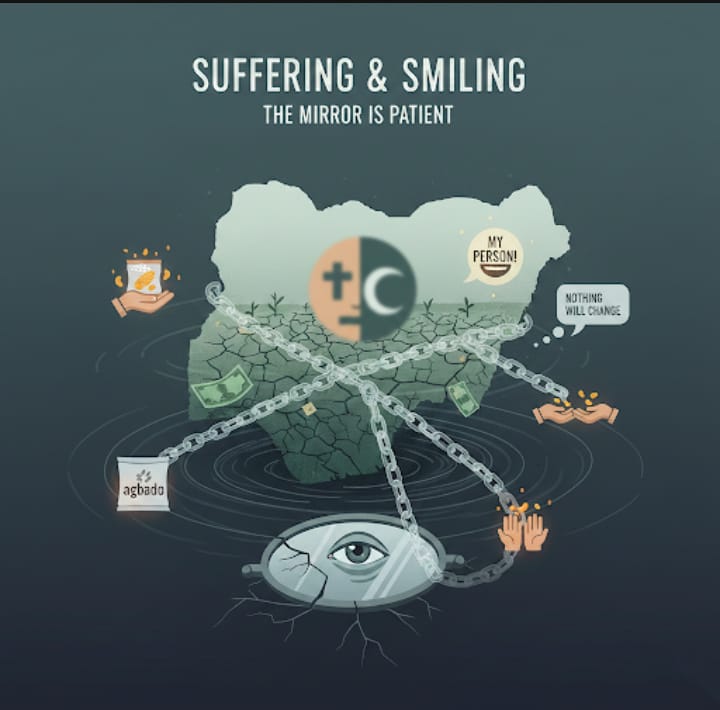
Perhaps the most painful part is not the hardship itself, but how normal it has become. People joke about suffering. They say, “That is Nigeria,” and move on. Expectations have been lowered so much that basic human needs feel like luxury.
When citizens stop expecting good governance, democracy weakens. When injustice becomes normal, exploitation grows. When people believe nothing can change, the chains tighten.
Slavery of the mind is more powerful than slavery of the body.
A Moral Question, Not Just a Political One
This issue is not about party slogans. It is about conscience. No administration, past or present, should be comfortable presiding over a system where the majority struggle for basics while a few enjoy excess.
Leadership is not about speeches. It is about measurable improvement in the lives of ordinary people. Fewer hungry homes. More working hospitals. Better schools. Safer streets. Real jobs.
If these are not increasing, then something must be questioned.
A Sunday Moment of Reflection
Sunday is a day many Nigerians pray, reflect, and seek renewal. It is a good day to ask hard questions.
Are we truly free if we cannot afford to live with dignity?
Are we citizens in practice, or just subjects who endure?
Have we accepted conditions that should never be normal?
Do we demand accountability with the same energy we use to survive hardship?
Modern day slavery in Nigeria is not written in law, but it is felt in daily life. It is the condition of working without progress, paying without benefit, hoping without system support.
But awareness is the beginning of change. A people who recognize their condition can begin to reshape it. A nation that demands better, peacefully but firmly, can rise.
Nigeria’s story is not finished. But it cannot improve if suffering is ignored and silence becomes comfort.
This Sunday, let reflection lead to awakening. Let awakening lead to responsibility. And let responsibility, both from leaders and citizens, lead to a nation where freedom is not just declared, but lived.
Do not pray only for the rain to fall. Walk out and dig the well. Demand what is yours with a clear voice and do not look back. The sun is up, and there is work to be done.
Stop waiting for a better day and start making it. Ask for the things a man needs to live well. Do it now. It is a long road, but the first step is the only one that matters.
ECP Channel
Sunday Editorial
Editorial Team
_The Truth and Nothing But the Truth_